
November 17, 2026
Holiday travel can put hundreds of miles between you and your regular dentist, and a toothache can make every mile feel longer. A filling may loosen on the drive to a relative’s house. A sensitive tooth may start throbbing during a flight. Or a chipped tooth may turn a fun weekend into a search for care in an unfamiliar town.
For stable dental problems, a virtual consultation can be a practical first step: The TeleDentists’ self-pay consultation is $64, and licensed dentists are typically available within about 10 minutes, 24/7, by video, app, phone, or web. By comparison, the American Dental Association (ADA) has reported an average of about $749 for a dental-related emergency department visit when the patient is not hospitalized. That figure comes from an analysis of historical data; it is an average, not a quote for your visit. Actual ER bills vary, with costs sometimes falling in a roughly $400–$1,500 range.
A virtual visit does not repair a broken tooth or replace in-person treatment when you need it. But it can help you understand what to do next, avoid making a problem worse, and find out whether you need prompt local dental care, or emergency medical care.
Travel changes the usual rhythm of oral care. Long drives, airport schedules, hotel stays, and late nights can disrupt brushing and flossing. Road snacks and holiday sweets may mean more frequent exposure to sugar. A cleaning or checkup that was easy to postpone at home can be harder to arrange once you’re away.
Air travel can add another variable. Cabin-pressure changes may make an existing dental issue more noticeable, while sinus pressure can sometimes feel like discomfort in the upper teeth. Pressure-related pain isn’t a diagnosis, though: a tooth that hurts during or after a flight may need a dentist’s assessment.
If you already have tooth pain, sensitivity, a loose restoration, or unfinished dental work, consider getting advice before you leave. It’s easier to plan care at home than to search for a dentist while traveling.
Travelers often seek guidance for issues such as:
For additional background on what to do when a tooth is damaged, see the ADA’s dental emergency guidance.
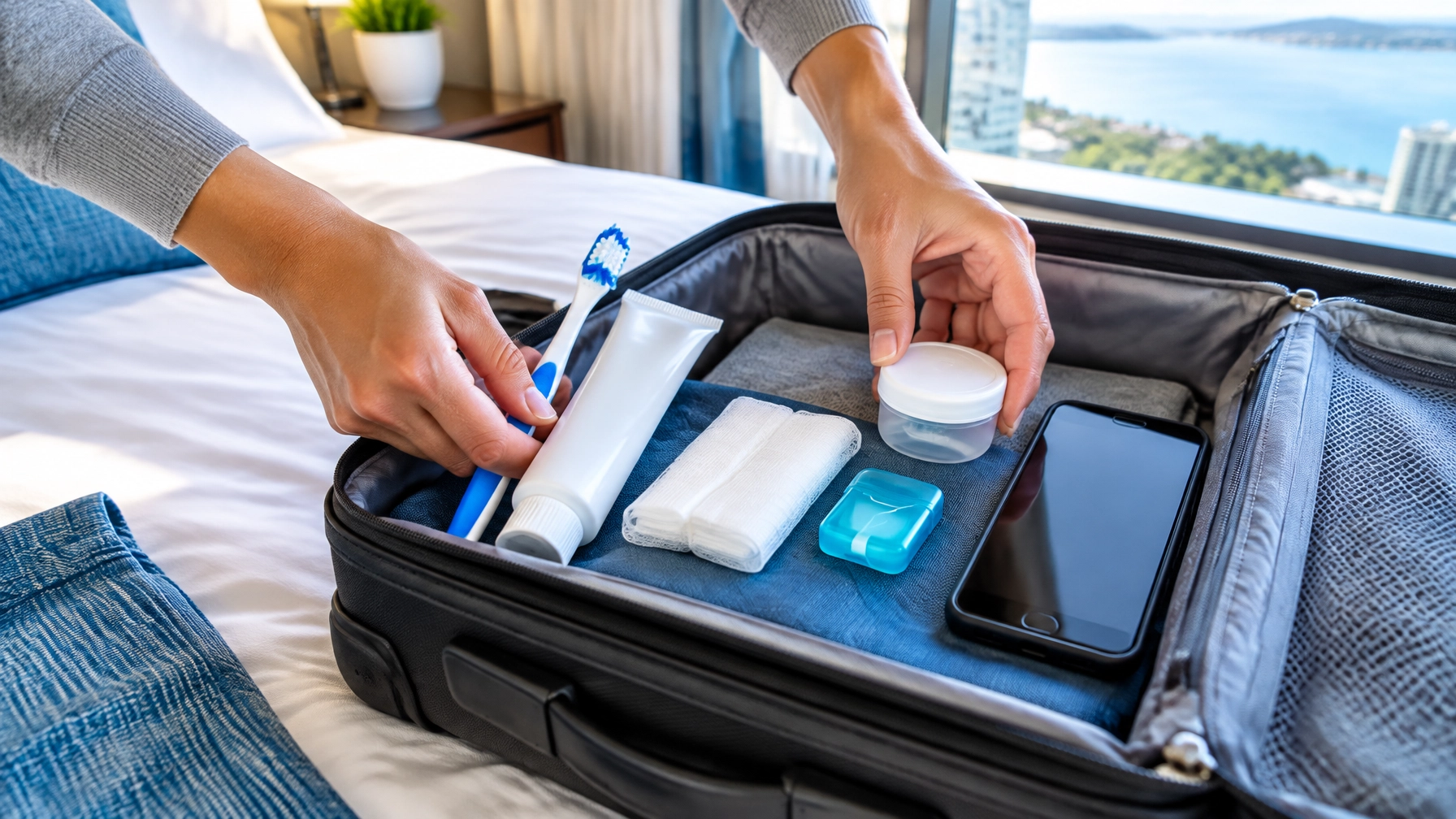
While arranging professional advice, a few simple steps may help protect the tooth:
These are temporary measures, not a fix. Persistent or severe pain, pain when biting, swelling, fever, or drainage calls for prompt professional attention.
Most emergency departments are not equipped to repair a tooth. They may be able to assess urgent medical concerns or help manage symptoms, but definitive dental treatment often requires a dentist. That’s one reason the ADA’s reported average cost for a non-hospitalized dental-related ER visit, about $749-is worth considering alongside other care options. It is not a guarantee of what an ER will charge, and it does not mean every dental problem can be handled virtually.
Go to an emergency department or call emergency services now if you have:
A knocked-out permanent tooth is time-sensitive and needs urgent dental care. If it is accompanied by major facial trauma or another medical emergency, seek emergency medical care, too.
Being far from home doesn’t have to mean waiting until you return to ask a dentist what to do. The TeleDentists is Google’s top-rated teledentistry service, with an NPS of 95. A licensed dentist is typically available within about 10 minutes, 24/7, by video, app, phone, or web.
From a hotel room, airport, or safely parked car, a dentist can assess your concerns, review photos, advise on next steps, prescribe non-narcotic medication when appropriate, and refer you to a local dentist if an in-person visit is needed. Never use a phone or start a consultation while driving. Pull over and park safely first.
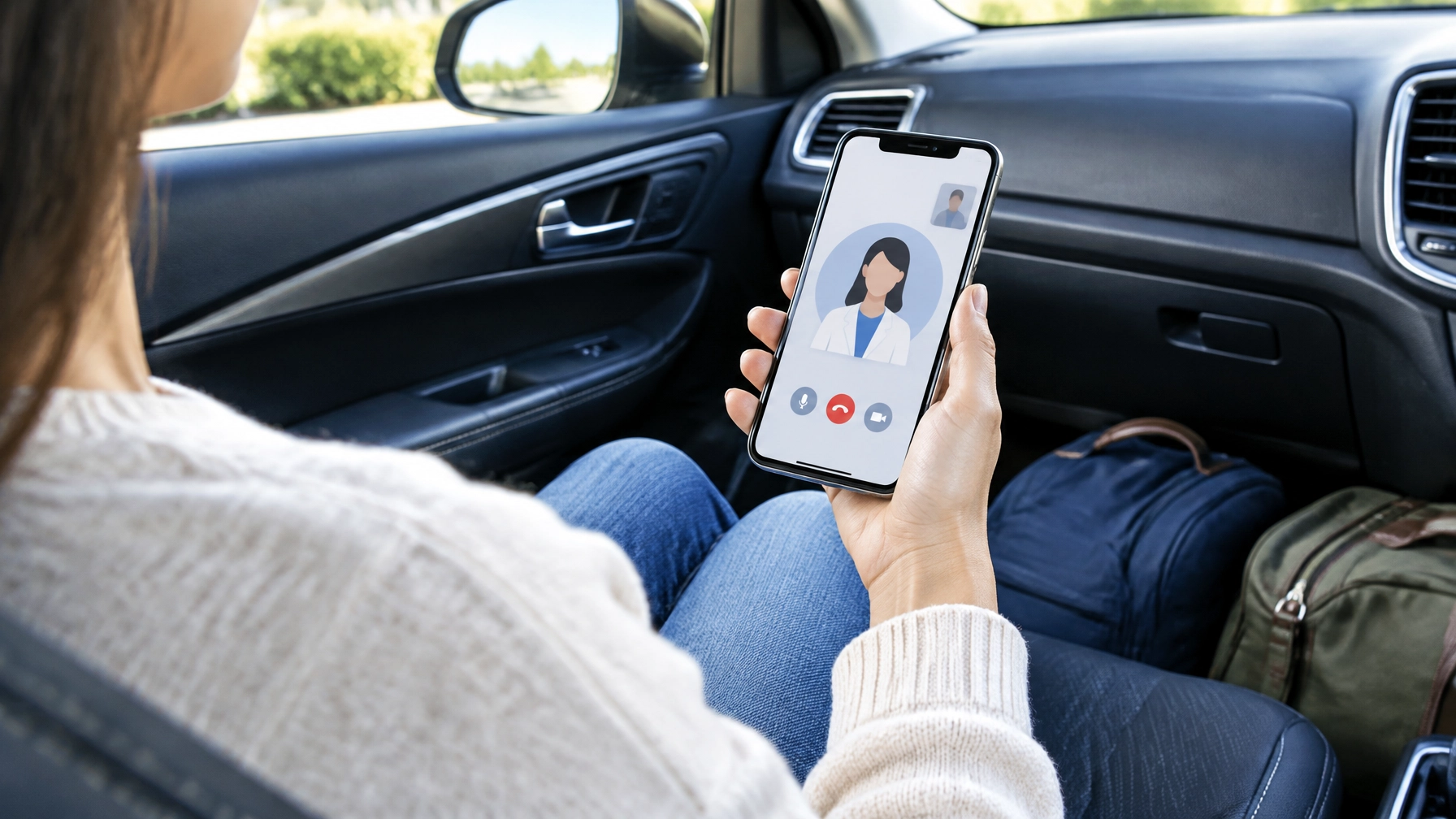
The $64 consultation is a way to get professional guidance, not a promise that a virtual visit can replace hands-on care. But when a tooth starts hurting away from home, timely advice can help you choose the right next step without defaulting to an expensive ER visit that may not fix the tooth. Learn more about virtual dental consultations or find answers on the frequently asked questions page.
Need dental guidance while traveling? Book a consultation with The TeleDentists. For more guidance, connect with The TeleDentists.


