
December 29, 2026
URL slug: /teledentistry/tribal-ihs-health
For Tribal health organizations, Indian Health Service (IHS) partners, and community care teams, improving dental access often requires more than adding another appointment slot. Patients may face long distances to a dental clinic, limited transportation, workforce shortages, restricted specialty access, or dental concerns that arise when local offices are closed.
Teledentistry can help extend the reach of existing oral health services without replacing Tribal, IHS, or local dental providers. When implemented thoughtfully, it can serve as a clinical bridge: connecting patients and care teams with licensed dental professionals for timely assessment, triage, treatment guidance, prescriptions when appropriate, referrals, and follow-up navigation.
The TeleDentists provides 24/7 virtual dental consultations through video, phone, mobile, and web platforms. For partner organizations, the service can support continuity across community settings while helping patients understand what to do next.
Tribal and IHS health settings are not interchangeable. Each organization operates within its own governance structure, clinical resources, geography, patient priorities, referral relationships, technology infrastructure, and care delivery model. A solution that works in one service area may require significant adaptation in another.
Still, care teams may encounter several common access considerations:
The Indian Health Service Division of Oral Health provides national leadership and support for oral health services across IHS, Tribal, and Urban Indian health programs. IHS also maintains a Dental Directory to help identify federal and Tribal dental facilities. These resources underscore an important point for implementation: local relationships and local operating policies matter.
A virtual dental service should be designed to connect patients to those existing resources: not direct patients away from them.
The value of teledentistry is not limited to the video visit itself. For a Tribal or IHS-affiliated care network, the service can help close gaps between a patient’s first concern and the appropriate next step.
A virtual dental consultation may help a licensed dentist:
The TeleDentists offers consultations 24/7. Connection in under 10 minutes may be available where supported by local coverage, platform availability, and operating conditions; partner organizations should confirm service levels during implementation planning.
This type of access can be especially useful when a patient needs timely clinical direction but does not yet know whether the concern requires an emergency department, an in-person dental appointment, a primary care visit, or home care with scheduled follow-up.
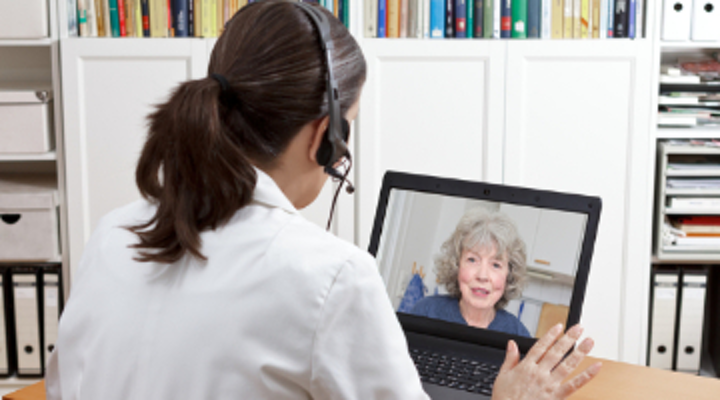
Dental pain, swelling, broken teeth, and other concerns do not follow clinic schedules. An after-hours virtual consultation can give patients a clinically informed response when their usual dental office is unavailable.
This does not eliminate the need for local emergency protocols. Instead, it can help care teams distinguish between concerns that may be managed with guidance and follow-up and situations that require immediate in-person care.
Virtual care may reduce unnecessary travel for an initial assessment, particularly when the patient has limited transportation or lives far from a dental facility. It can also provide guidance before a patient makes a long trip, helping them prepare for the type of care they may need.
For rural communities, teledentistry is most valuable when it is integrated with local referrals, transportation coordination, community health representatives, and existing clinical relationships.
Oral health concerns often appear in primary care and other healthcare settings. A medical or community health team may identify dental pain, suspected infection, medication questions, or difficulty accessing follow-up care.
The TeleDentists’ virtual dental services for doctors and healthcare organizations are designed to support communication between medical and dental professionals, provide real-time assessment, assist with follow-up care, and develop referral connections with local providers.
A patient may begin with a call to a community clinic, visit an emergency department, contact a senior care facility, or reach out to a health plan. A virtual dentist can provide another point of clinical support within that broader network.
For organizations that wholesale healthcare services, The TeleDentists’ business program can help add virtual dental access to existing offerings for hospitals, emergency departments, urgent care organizations, healthcare payors, and other partners.
Before launching a teledentistry program, partners should define how it will work within their own care environment. A practical planning process may include the following steps.
Start with the situations creating the greatest access or workflow burden. These may include after-hours dental concerns, emergency department referrals, primary care screening, pediatric questions, post-procedure follow-up, or specialist navigation.
Create clear protocols for concerns that cannot be managed virtually. These may include facial swelling affecting breathing or swallowing, uncontrolled bleeding, significant trauma, suspected deep infection, or other time-sensitive conditions.
The virtual dentist should be able to direct the patient to the appropriate local or emergency resource, while the partner organization defines how that escalation is documented and coordinated.
Build a current list of Tribal, IHS, Urban Indian, private, specialty, hospital-based, and emergency dental resources relevant to the service area. Referral workflows should respect local preferences, patient choice, payer requirements, and existing care agreements.
The HHS Getting Started with Telehealth for Oral Health guidance addresses technology, privacy, consent, documentation, and follow-up considerations. Partners should also evaluate device access, broadband reliability, interpreter or language support, accessibility needs, and staff training.
Useful measures may include:
Program evaluation should be conducted with appropriate Tribal governance, privacy safeguards, and data-use agreements. Patient and community trust should remain central to the design.
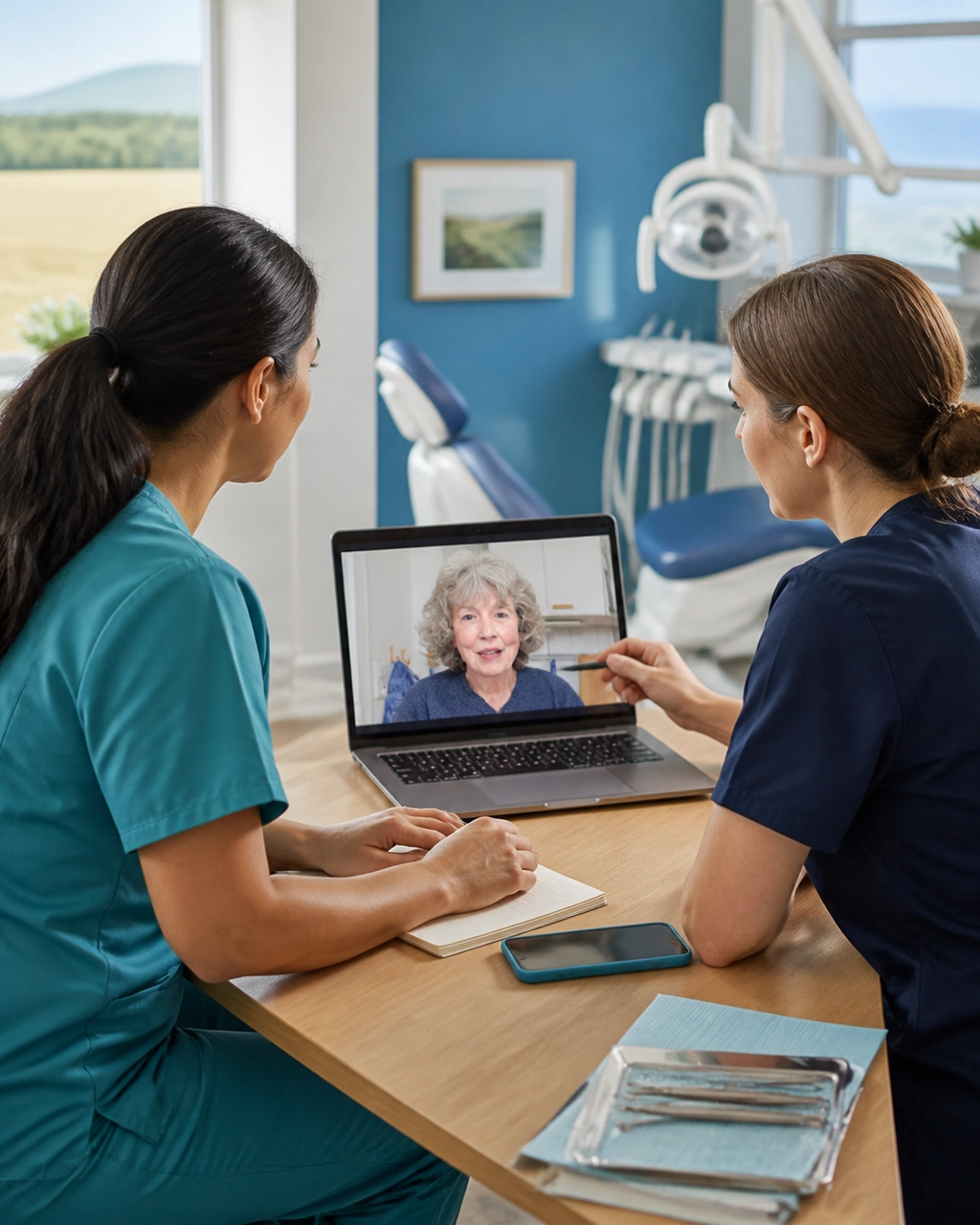
Teledentistry is not a substitute for an examination, imaging, dental procedures, or treatment that requires an in-person clinician. A virtual dentist may not be able to confirm the full extent of decay, infection, bone involvement, trauma, or other conditions without radiographs and direct examination.
Virtual care may also be limited by:
The TeleDentists can provide clinical guidance, prescriptions when appropriate, and referrals, but a prescription is not guaranteed and does not replace definitive dental treatment. Patients with potentially life-threatening symptoms should follow local emergency instructions and seek immediate in-person care.
The strongest teledentistry programs reinforce the services already trusted by patients and communities. For Tribal and IHS partners, that means aligning virtual dental access with local clinical leadership, community priorities, referral networks, consent practices, and care coordination processes.
The goal is not to create a parallel system. It is to make the existing system more connected: so patients can receive timely dental guidance, care teams can make informed decisions, and local dental providers receive patients with clearer next steps.
Whether your organization is exploring after-hours coverage, medical-dental integration, emergency department support, or broader rural access, The TeleDentists can help you assess a partner model suited to your network.
Contact The TeleDentists to discuss how 24/7 virtual dental consultations can extend access across your Tribal, IHS, or community care organization.


