
October 20, 2026
URL slug: /teledentistry/travel-hospitality
Travel is designed to be memorable: but a sudden toothache, chipped tooth, dental trauma, or painful swelling can quickly disrupt a guest’s entire experience. For hotel groups, resorts, airlines, cruise operators, travel companies, and destination management organizations, dental problems create a unique service challenge: the person needs timely guidance, but may be far from home, unfamiliar with local healthcare options, and unable to reach a dentist during normal business hours.
Teledentistry gives hospitality teams a practical way to help guests and staff connect with professional dental guidance without requiring an immediate trip to an unfamiliar facility. Through The TeleDentists’ business services, organizations can offer access to 24/7 virtual dental consultations, triage, care guidance, prescriptions when clinically appropriate, and local referral recommendations: subject to patient location, dentist licensure, and applicable rules.
A dental concern that might be manageable at home can feel much more urgent while traveling. Guests may not know which local providers are open, how emergency dental care works in the area, or whether their insurance will be accepted. They may also face language, transportation, or navigation challenges.
Common travel-related dental concerns include:
For hospitality staff, the issue may also affect staffing and operations. An employee experiencing severe dental pain during a shift may not know whether to leave work immediately, visit an emergency department, wait for a local dental office to open, or seek other advice. A virtual dental consultation can help clarify the next appropriate step.
The TeleDentists can serve as a clinical bridge between a traveler’s immediate concern and the in-person care they may ultimately need. A guest can use a smartphone, tablet, computer, phone, or web platform to discuss symptoms with a licensed dentist.
Depending on the patient’s location and applicable regulations, the dentist may be able to:
When supported in the patient’s location, connection with a dentist may be available in under 10 minutes. This timing is not universal or guaranteed, and availability depends on location, platform access, clinical demand, licensure, and applicable rules.
The goal is not to replace an in-person dental office. Many dental conditions require examination, imaging, procedures, or other hands-on treatment. Instead, teledentistry helps patients make a more informed decision about what to do next.
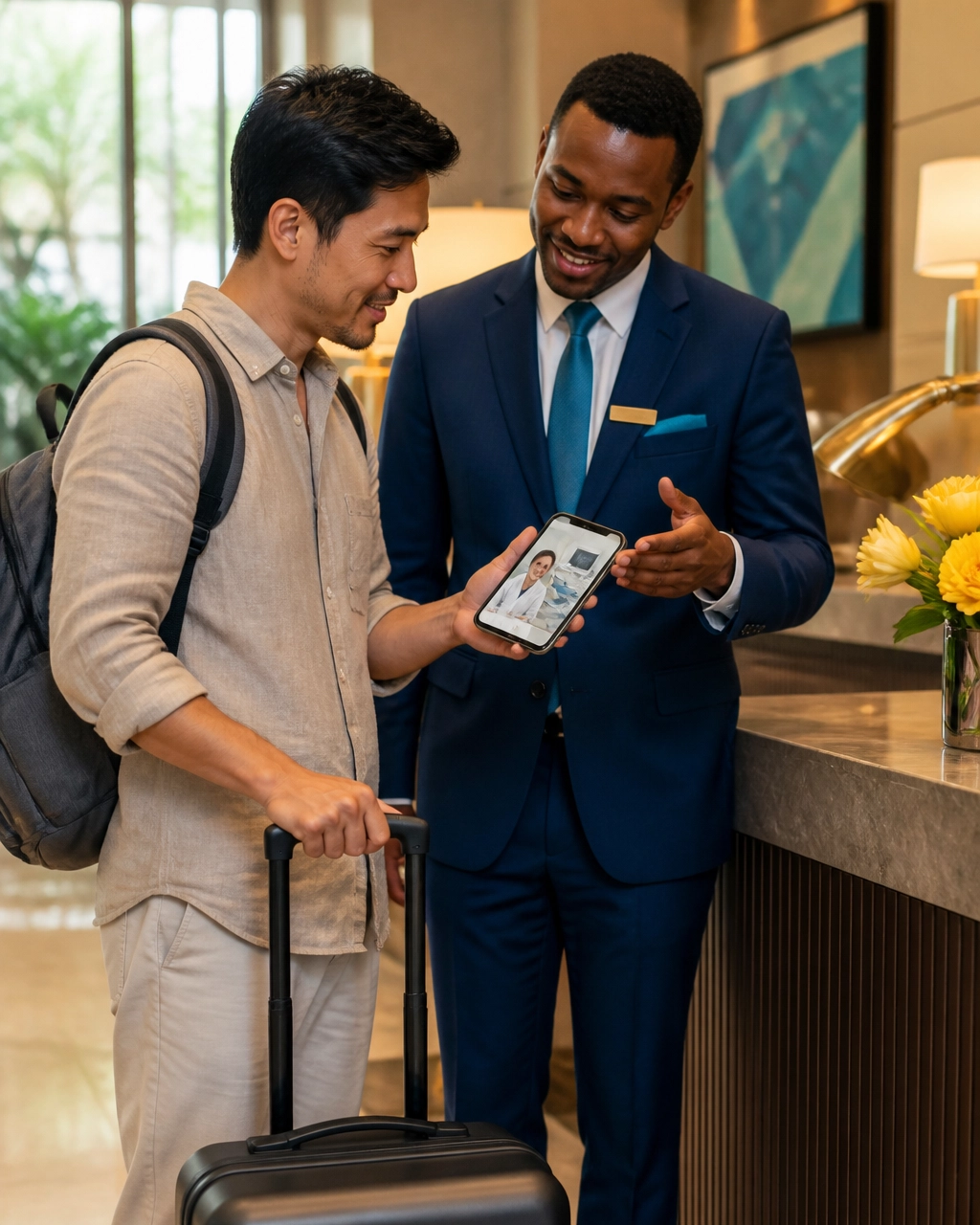
A front desk or concierge team is often the first place a guest turns when something goes wrong. Staff may be asked to find an open dentist, call a taxi, interpret healthcare instructions, or explain where a pharmacy is located. These responsibilities can consume valuable time and still leave the guest uncertain.
A teledentistry partner can give hospitality teams a consistent resource to share. Depending on the organization’s program design, access may be promoted through:
A simple response might be: “We can help you connect with a virtual dentist to discuss your symptoms and determine the next step. If you need in-person care, the dental team can provide guidance about local follow-up options where available.”
This approach supports the guest without asking hospitality employees to diagnose a dental condition or make clinical decisions outside their role.
Hospitality depends on people working early mornings, late nights, weekends, and holidays. Traditional dental offices may not be open when employees need help, and taking time away from work to search for care can be difficult.
Offering virtual dental access as part of an employee health or wellness program can help staff address concerns earlier. A team member may be able to consult a dentist from a private space before or after a shift, using a phone or connected device.
Potential benefits include:
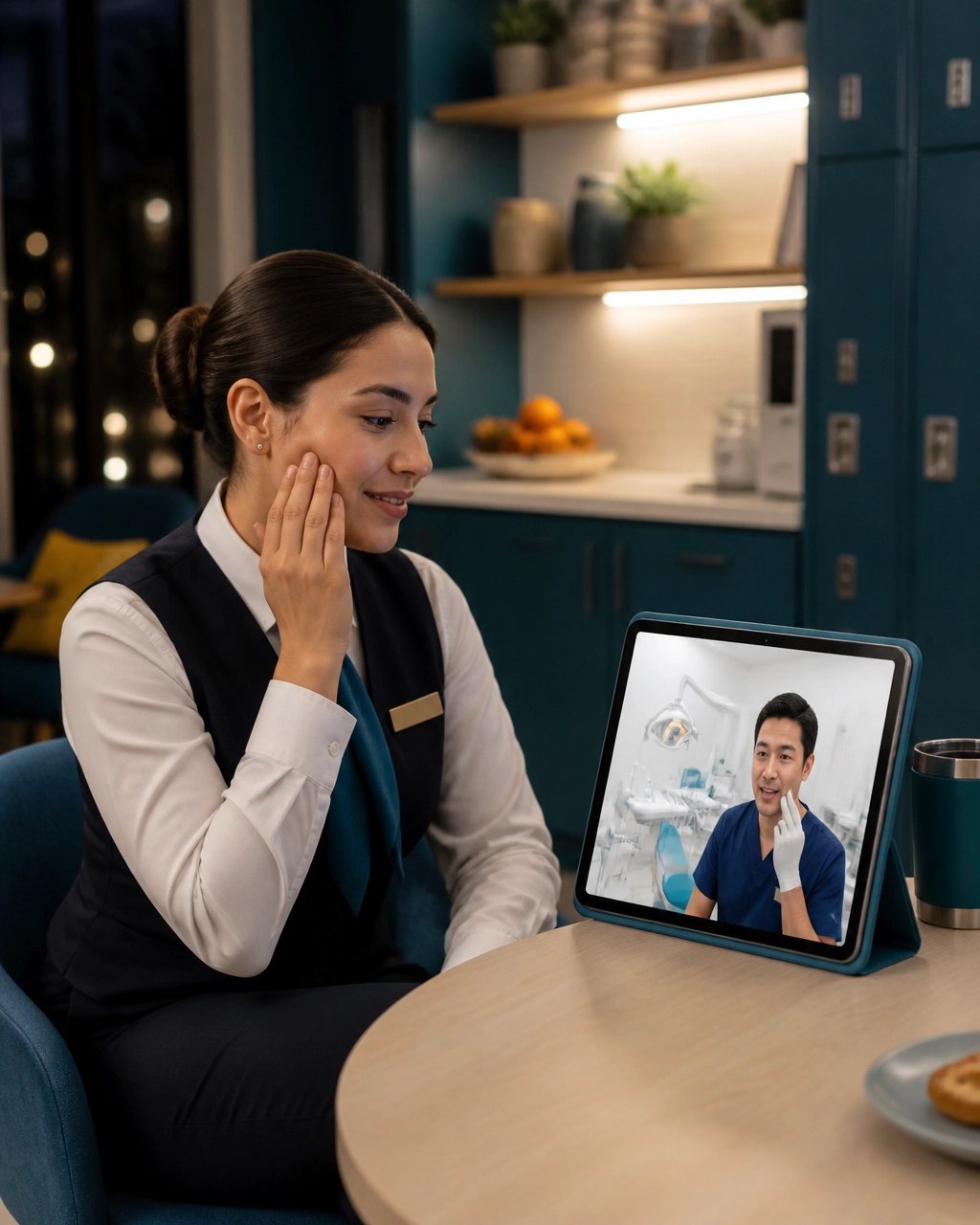
Virtual care can also support staff who are traveling for work, attending conferences, relocating, or working at properties far from dental services. As with guest care, availability and the scope of services depend on the employee’s location and applicable rules.
A virtual consultation is often most valuable when it helps a patient understand what happens next. A guest may need an urgent dental appointment the following morning, a pharmacy recommendation, or instructions to seek immediate medical attention.
The TeleDentists may provide local referral recommendations when a patient needs in-person treatment. However, hospitality leaders should communicate this benefit accurately. Local provider access is not guaranteed in every location, and a recommendation does not necessarily mean the provider is in-network, open immediately, able to speak the patient’s preferred language, or able to accept the patient’s insurance.
Travel and hospitality partners can strengthen the experience by preparing a local care-navigation framework that includes:
A clear escalation process: Define when staff should contact emergency services or direct a guest to an emergency department: for example, with difficulty breathing, uncontrolled bleeding, major facial trauma, or rapidly increasing swelling.
A local resource list: Maintain information for nearby emergency departments, pharmacies, dental offices, transportation services, and language-support resources.
Privacy-conscious assistance: Offer a quiet space for a guest or employee to complete a virtual consultation. Staff should help with access and logistics while respecting patient privacy and consent.
Transparent cost communication: Explain whether the consultation is guest-paid, included in a travel benefit, subsidized by the organization, or available through an insurance or employee program.
A practical after-hours protocol: Make sure overnight teams, call centers, shipboard staff, and remote property managers know where to direct dental questions.
Virtual dental care is appropriate for many urgent and non-life-threatening concerns, including tooth pain, sensitivity, dental discomfort, minor trauma, and questions about oral symptoms. It can also support routine consultations, pediatric dental guidance, treatment recommendations, and second opinions. Explore the full range of The TeleDentists’ dental services.
A virtual consultation cannot provide every form of dental treatment. A dentist may not be able to confirm the full extent of a condition without an in-person examination, X-rays, or other diagnostic tools. Prescriptions are not guaranteed; they are issued only when clinically appropriate, legally permitted, and determined by the treating dentist.
International travel creates additional considerations. Dentist licensure and prescribing rules vary by jurisdiction, and service availability may differ by country, state, territory, or travel setting. Access while onboard an aircraft or vessel may also depend on connectivity, operational policies, and the patient’s location at the time of care.
These limitations do not reduce the value of teledentistry. They reinforce its role as a responsible access point for education, triage, immediate guidance, and care navigation.
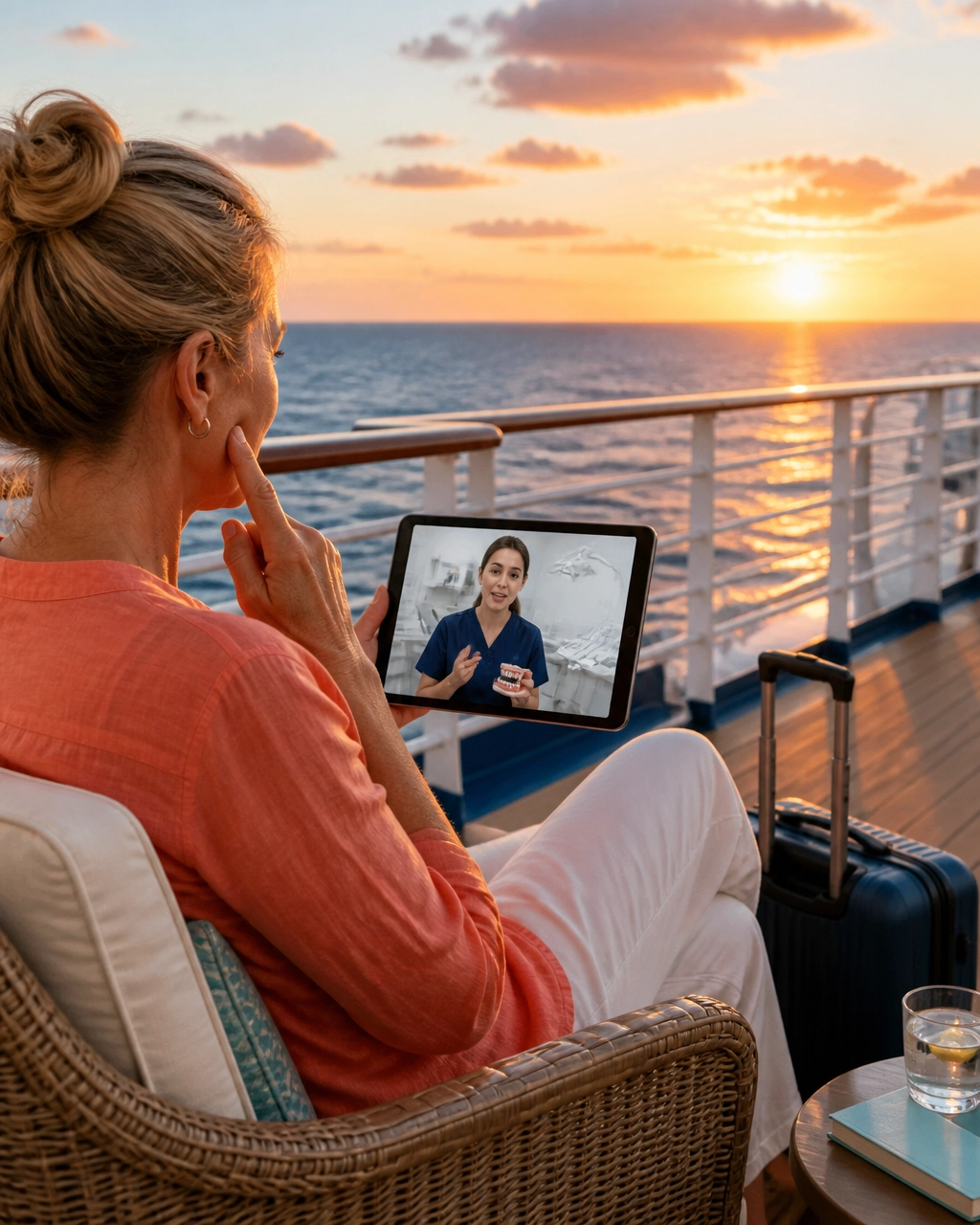
For hospitality leaders, the question is not whether every dental issue can be solved virtually. The more practical question is whether guests and staff can receive timely, professional guidance before a manageable problem becomes a major disruption.
The TeleDentists helps travel and hospitality organizations build a more responsive dental support experience with:
To discuss how virtual dental care could support your guests, staff, or travel-health program, visit The TeleDentists or contact the team. Availability, response times, prescribing, and referrals depend on location and applicable rules.


