
October 27, 2026
URL slug: /teledentistry/summer-camps
Summer camp is built around activity: swimming, hiking, sports, outdoor games, crafts, and new experiences. Unfortunately, those activities can also lead to tooth injuries, sudden toothaches, broken orthodontic appliances, and other oral health concerns.
For camp directors, nurses, and youth program leaders, a dental incident creates more than a clinical question. Staff may also need to determine whether the camper requires emergency medical care, contact a parent or guardian, arrange transportation, locate an available dentist, and document what happened: all while keeping the rest of the camp operating safely.
The TeleDentists can provide a virtual dental consultation option for camp teams and families who need professional guidance, particularly when a traditional dental office is closed or located far from camp.
Many camps operate in rural or remote areas where the nearest dental office may be several miles: or more than an hour: away. Dental offices may also have limited evening or weekend availability, while camp incidents can happen at any time.
Common camp-related dental concerns include:
The uncertainty can be especially stressful when a parent is several hours away. Camp staff may know that a child needs dental attention but lack the information needed to determine the next appropriate step.
Teledentistry can serve as a clinical bridge between the initial incident and in-person care. A licensed dentist can review symptoms, discuss what staff observe, help identify red flags, and recommend appropriate next steps.
Through virtual dental consultations, The TeleDentists provides access to licensed dentists through video calls and compatible smartphones, tablets, or computers. Consultations are available 24/7, subject to applicable licensing, platform availability, and local coverage.
Where supported, patients may connect with a dentist in under 10 minutes. This timing is not guaranteed for every location or situation, but it can give families and camp teams a convenient option when immediate dental guidance is needed.
Depending on the evaluation, the dentist may provide:
A virtual consultation does not replace emergency medical services, diagnostic imaging, surgical treatment, dental restoration, or other care that requires a hands-on examination. Its value is helping the right people make a more informed decision about what should happen next.
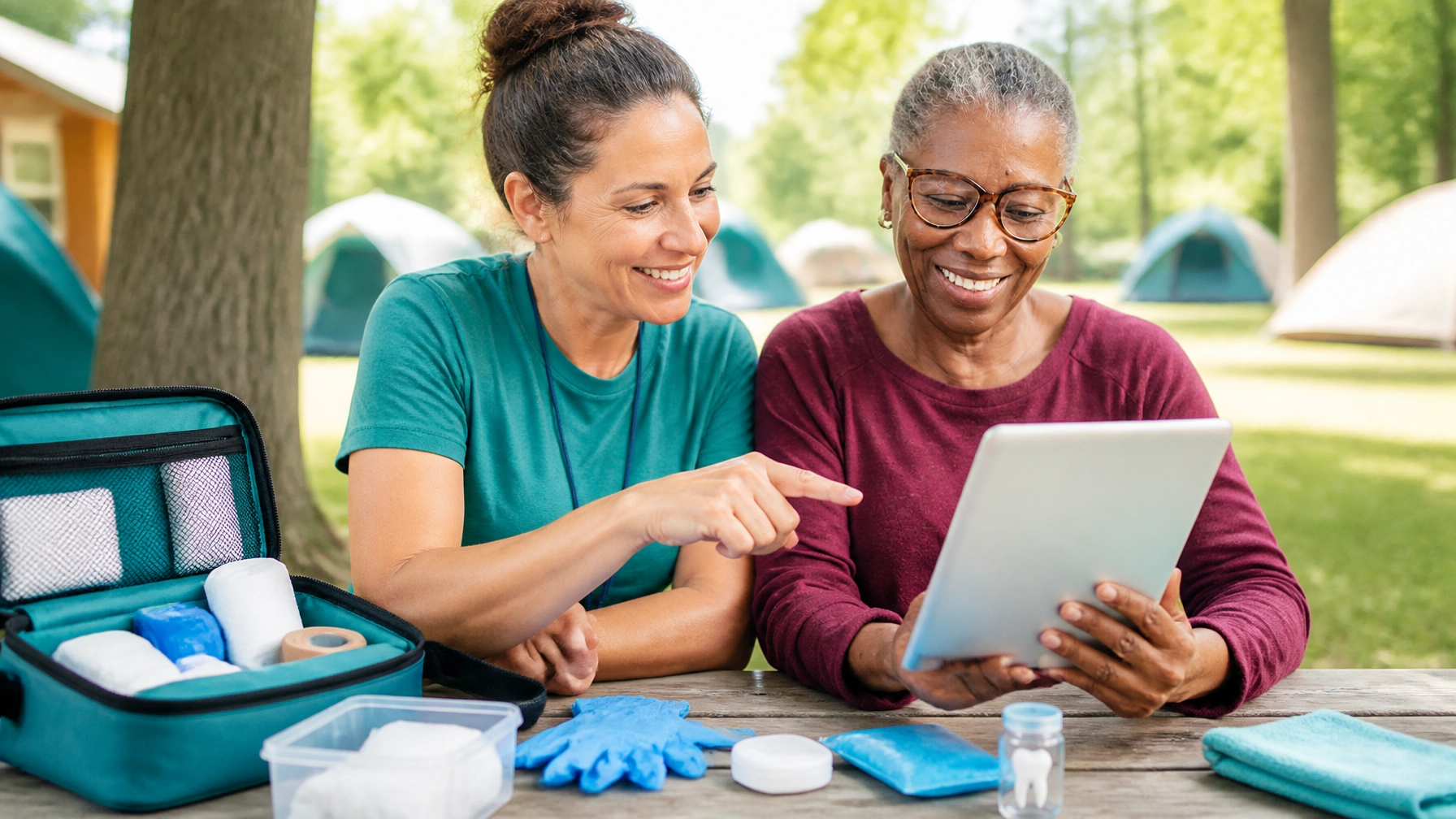
A camper may report pain after meals, during the night, or following an outdoor activity. A dentist can discuss the location, severity, duration, and associated symptoms to help determine whether the concern may require prompt dental evaluation.
Pain accompanied by swelling, fever, difficulty eating, or worsening symptoms should be treated seriously. A virtual dentist may help the camp team and parent understand the urgency and identify local care options.
A fall, collision, or sports activity can damage a tooth. Camp staff should follow their established first-aid and medical protocols, preserve any tooth fragment when appropriate, document the incident, and notify the parent or guardian according to camp policy.
A virtual consultation may help assess reported symptoms and guide the family toward same-day or otherwise timely in-person dental care when indicated.
A knocked-out permanent tooth is time-sensitive. Staff should activate the camp’s emergency response procedures, assess for other injuries, and seek immediate professional guidance. The steps for a permanent tooth differ from those for a primary, or baby, tooth, so staff should not assume that the same response applies to every camper.
Resources such as KidsHealth’s guidance on tooth injuries can be included in staff preparation materials. A virtual dentist may also provide real-time guidance while the camp team coordinates with the parent, emergency services, or an in-person dental provider.
A loose bracket or poking wire may not be life-threatening, but it can cause significant discomfort or injure the lips, cheeks, or tongue. Dental or orthodontic wax may provide temporary protection if allowed under camp protocol.
A virtual consultation can help determine whether the issue needs urgent attention, routine orthodontic follow-up, or medical evaluation: for example, if an appliance is deeply embedded or creates an airway concern.
Dental symptoms may occur alongside a head, face, or neck injury. Difficulty breathing or swallowing, uncontrolled bleeding, loss of consciousness, suspected jaw injury, significant facial trauma, or rapidly increasing swelling should be treated as potential medical emergencies.
Camp staff should call 911 or activate emergency medical services whenever required by their protocols. A virtual dental consultation should never delay emergency medical care.
When a dental incident occurs away from home, families need clear and timely information. Camp operators should define in advance:
Parents will typically want to know what happened, when it happened, what symptoms were observed, what first aid was provided, and what care is being recommended.
The TeleDentists can help families understand a dentist’s recommendations and navigate referrals, but camp staff remain responsible for following their own medical, consent, emergency, safeguarding, and parent-notification procedures.

A teledentistry resource can support more consistent communication between camp staff, families, and dental professionals. It may be particularly useful for:
For organizations exploring a broader partnership, The TeleDentists also provides teledentistry services for businesses. A partnership can be designed around the needs of the organization, its families, and its existing medical and emergency-response structure.
Before campers arrive, camp leaders should consider the following:
Teledentistry is not appropriate for every situation. A virtual dentist cannot perform hands-on treatment, take X-rays, repair a tooth, reinsert an appliance, suture a wound, or provide hospital-level care through a video consultation.
Connectivity, patient cooperation, age, symptoms, location, licensing requirements, and the quality of available images can all affect the evaluation. A dentist may recommend immediate in-person care even when a virtual consultation is available.
Camps should also avoid presenting teledentistry as a guarantee that transportation, emergency-department visits, or dental appointments can be avoided. The purpose is to provide professional guidance and care navigation: not to replace the camp’s established safety procedures or necessary in-person treatment.
Dental problems do not follow camp schedules. With a prepared protocol and access to professional guidance, camp teams can respond more confidently when a camper experiences tooth pain, an injury, or a broken appliance.
The TeleDentists offers 24/7 virtual dental consultations for families and organizations seeking timely dental guidance. Where supported, patients may connect in under 10 minutes, and dentists can provide triage, appropriate prescriptions, referrals, and next-step recommendations when in-person care is needed.
Learn more or connect with The TeleDentists. Camps and youth-serving organizations can also contact the team to discuss a care-access partnership.


