
November 17, 2026
URL slug: /teledentistry/dental-service-organizations
For dental service organizations, access is more than a patient experience metric. It is an operational challenge that affects every location in the network.
Patients need help after office hours. New-patient calls arrive when front-desk teams are busy. An office may have availability in one market but a full schedule in another. Patients in rural or underserved areas may live far from the nearest affiliated practice. When they cannot quickly find guidance, they may delay care, call multiple offices, or seek treatment in an emergency department.
Teledentistry for DSOs can provide a virtual access layer that supports patients while complementing the care delivered by affiliated practices. With a virtual dental consultation from The TeleDentists, a DSO can offer around-the-clock clinical guidance, triage, treatment recommendations, prescriptions when appropriate, and navigation to the right next step.
The goal is not to replace member practices. It is to help patients reach the right care pathway sooner.
Multi-location dental networks often manage patient demand across different schedules, geographies, provider types, and levels of clinical capacity. A centralized virtual service can help address several common pressure points.
Tooth pain, swelling, broken restorations, and post-operative concerns do not follow office hours. Without an after-hours option, patients may call an on-call dentist, leave a voicemail, visit an emergency department, or wait until symptoms worsen.
The TeleDentists provides 24/7 virtual dental consultations through video, phone, mobile, and web-based platforms. Patients may connect with a licensed dentist in under 10 minutes where supported by coverage, licensure, and platform availability.
For a DSO, this creates a clinically supported access point for nights, weekends, and holidays without requiring every affiliated office to staff a dentist outside normal hours.
Practice teams frequently spend valuable time answering questions that may not require an in-person appointment. Patients may need help understanding whether a symptom is urgent, what to do after a procedure, or where to seek care when their regular dentist is unavailable.
Virtual triage can give patients a timely clinical response while helping office teams focus on scheduled patients, in-office care, and higher-priority calls. The virtual dentist can assess the concern, explain potential next steps, and determine whether the patient needs immediate in-person treatment, a routine appointment, specialist evaluation, or interim guidance.
A DSO’s first interaction with a prospective patient can influence whether that person remains engaged. Delayed callbacks or unclear appointment pathways can create friction before a patient ever reaches an affiliated practice.
A teledentistry program can serve as a virtual front door for new-patient triage. Patients may receive initial guidance and, when an in-person visit is appropriate, be directed toward a participating location based on geography, clinical needs, availability, and the DSO’s routing protocols.
This approach does not guarantee conversion or referral volume. It does provide a structured opportunity to make the next step clearer and more responsive.

The TeleDentists’ virtual dental services can be incorporated into a DSO’s access strategy in several ways.
A patient experiencing pain, swelling, bleeding gums, a chipped tooth, or another urgent concern can speak with a licensed dentist remotely. The consultation may help clarify the level of urgency and whether the patient should:
When clinically appropriate and permitted by applicable requirements, the dentist may prescribe medication. Prescribing decisions depend on the patient’s history, symptoms, location, clinical assessment, and applicable laws.
Patients may need help understanding a proposed treatment plan before committing to care. A virtual consultation can provide an additional perspective, explain treatment options, and identify questions the patient should discuss with the treating dentist.
The TeleDentists also offers expert second opinions, which may be useful for patients evaluating recommendations related to restorative care, implants, orthodontics, or other complex treatment decisions.
A second opinion should support informed decision-making: not undermine the relationship between a patient and an affiliated practice.
When in-person treatment is required, the virtual encounter should lead to a clear handoff. Depending on the partnership model, that may include directing the patient to a nearby affiliated practice, helping the patient understand what type of appointment to request, or sharing relevant consultation information through an agreed-upon workflow.
The DSO should define how referrals are handled, including:
The more clearly these responsibilities are defined, the less likely patients are to experience a gap between virtual guidance and in-person care.
A multi-location network may have strong coverage in metropolitan areas but limited access across rural markets or communities without local specialists. Teledentistry can act as a clinical bridge in those areas.
Remote consultations cannot replace hands-on examinations, radiographs, procedures, or emergency surgery. They can, however, give patients an informed next step while the DSO coordinates local care. This is particularly valuable when the nearest affiliated practice is not immediately available or when a patient needs help deciding whether travel is necessary.
Virtual care can also support patients after an office visit or procedure. Patients may have questions about symptoms, medications, oral hygiene, healing, or whether a change requires a return visit.
A virtual dentist can help determine whether the concern appears appropriate for routine monitoring or requires escalation to the treating practice. This can support continuity while reducing avoidable confusion for patients and practice teams.
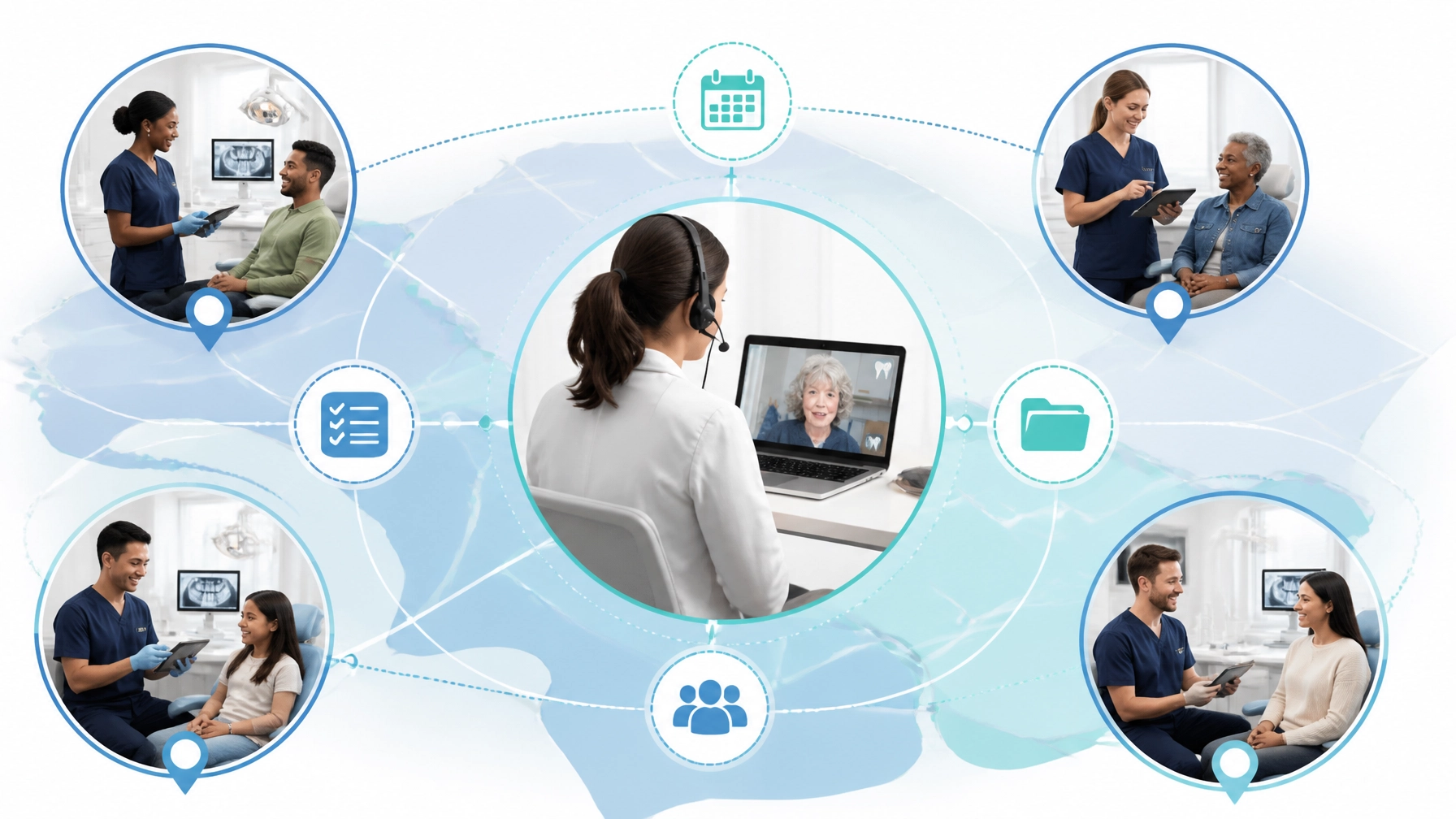
A well-designed teledentistry partnership may help a DSO:
The value should be evaluated through operational and patient-care measures rather than assumptions about guaranteed financial performance. Useful metrics may include response time, percentage of consultations requiring in-person escalation, appointment handoff completion, patient satisfaction, after-hours utilization, and staff-reported call burden.
CareQuest Institute research found that seven in 10 patients had an in-person dental visit within a week of a teledentistry visit, while only 1% of those returning for in-person care returned for an emergency dental visit. These findings suggest that virtual care can function as part of a broader care pathway: not necessarily as a substitute for the dental office. Read the CareQuest report on teledentistry triage and cost.
Before launching a program, DSO leaders should align clinical, operational, technical, and compliance teams.
Determine which use cases are appropriate for virtual care. Common examples include urgent symptom triage, treatment guidance, second opinions, post-operative questions, oral health education, and referral coordination.
Also define escalation criteria for facial swelling, uncontrolled bleeding, trauma, airway concerns, fever, or other symptoms that may require urgent in-person or emergency medical care.
Teledentistry is shaped by state licensure, scope-of-practice rules, prescribing requirements, consent standards, privacy obligations, and payer policies. Coverage and availability may vary by patient location and clinical circumstance.
A DSO should confirm these requirements with its legal, compliance, clinical, and payer teams before implementation.
Potential integration points include:
The exact integration model will depend on the DSO’s existing systems and the partnership scope. A phased launch: such as after-hours triage in selected markets: may allow the organization to test workflows before expanding across the network.
Patients should understand when they are receiving virtual guidance and when they need to return to an affiliated practice. Clear documentation, consistent communication, and defined ownership of follow-up are essential.
The TeleDentists can complement DSO networks by providing access when practices are closed or unavailable, while affiliated dentists remain central to examinations, procedures, treatment delivery, and ongoing care.
For DSOs, teledentistry is best viewed as a network capability. It can help connect patients to licensed dental guidance at the moment a question or concern arises, then support navigation to the appropriate affiliated practice or local provider.
The result is a more flexible access model: virtual when appropriate, in-person when necessary, and coordinated across the patient journey.
If your DSO is evaluating after-hours coverage, overflow call support, new-patient triage, geographic expansion, or referral navigation, contact The TeleDentists to discuss a partnership model designed around your network’s needs. Visit The TeleDentists to explore how 24/7 virtual dental consultations can extend access while keeping affiliated practices at the center of care.


