
Let's talk about one of the most underrated operational headaches in correctional facilities: dental emergencies.
You've got an inmate doubled over with tooth pain at 2 AM. Your on-site medical staff can't do much beyond handing out ibuprofen. The nearest dentist won't be available until Monday. And the thought of coordinating an off-site transport? That means pulling guards off their posts, arranging vehicles, managing security risks, and burning through your budget faster than you can say "abscessed tooth."
Sound familiar? You're not alone. Dental complaints are among the most common health issues in correctional facilities, and they're creating a perfect storm of security concerns, budget overruns, and compliance headaches.
But here's the good news: there's a better way to handle dental triage that keeps everyone safer, slashes costs, and actually improves care outcomes. Enter teledentistry.
Every time an inmate needs to leave the facility for dental care, you're juggling a complex: and expensive: operation. There's the obvious security risk of transporting inmates outside the secure perimeter. Then there's the logistical nightmare of coordinating schedules between your facility, the dental office, and available transport staff.
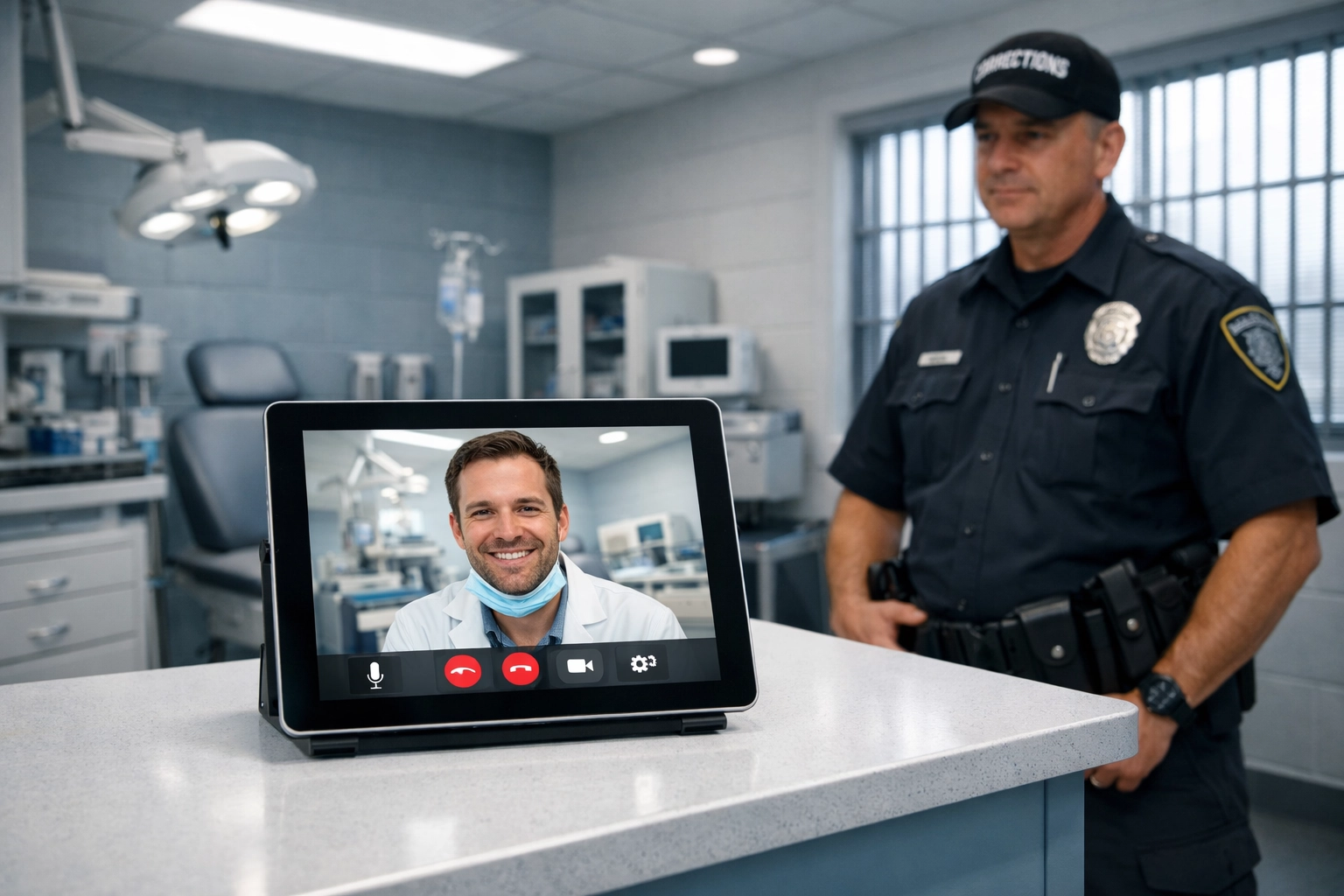
The numbers tell the story: a single off-site dental visit can easily cost $500-$1,000 when you factor in transport vehicles, guard overtime, and administrative coordination. Multiply that by the hundreds of dental complaints facilities receive annually, and you're looking at a significant line item in your operational budget.
But the costs aren't just financial. Off-site transports pull correctional officers away from their regular duties, creating staffing gaps that can impact facility security. And let's be honest: most of these trips could be avoided with proper triage.
Here's the reality: not every dental complaint requires an in-person visit. Many issues can be assessed, treated with prescriptions, or scheduled appropriately through virtual consultation. The problem has always been access to dental professionals who can make that determination quickly and reliably.
The best security protocol is often the simplest one: keep inmates within your secure perimeter whenever possible. Every transport represents a vulnerability: a moving target, if you will. And for what? Many times, it's for a consultation that could have been handled virtually.

Teledentistry eliminates up to 90% of unnecessary off-site dental transports by providing immediate triage within your facility. An inmate experiencing dental pain can be assessed by a licensed dentist via any web-enabled device: a tablet, computer, or smartphone. Your staff stays on-site. The inmate remains within the secure environment. And everyone gets answers fast.
This isn't just about convenience. It's about maintaining operational integrity. When correctional officers aren't pulled away for transport duty, they can focus on their primary responsibilities. When inmates don't leave the facility, you eliminate the security vulnerabilities that come with external movement. It's a win-win that facility administrators appreciate immediately.
Dental pain doesn't follow a 9-to-5 schedule, and it definitely doesn't care that your contracted dentist isn't available until Tuesday afternoon. Toothaches, abscesses, broken teeth, and oral trauma happen around the clock: often at the most inconvenient times.
According to established correctional healthcare standards, urgent dental care must be available 24 hours a day and cannot have a wait list. That's not a suggestion; it's the standard of care. But meeting that requirement with traditional in-person dental services? Nearly impossible without extraordinary expense.
Here's where virtual dental consultations become a game-changer. With The TeleDentists, licensed dentists are available in 10 minutes or less, any time of day or night. Weekend emergency? Covered. Holiday dental trauma? No problem. Middle-of-the-night abscess? We're there.
This kind of 24/7 access fundamentally changes how facilities can manage dental complaints. Your medical staff no longer needs to make judgment calls about dental issues outside their expertise. They can connect inmates with a licensed dentist immediately, get proper triage, and receive clear treatment recommendations: including prescriptions that can be sent directly to your facility pharmacy.
Let's walk through a typical scenario. An inmate reports severe tooth pain during evening hours. Under the traditional model, your medical staff would assess the situation with limited dental expertise, possibly provide pain medication, and schedule an outside dental appointment: which might not happen for days or weeks.
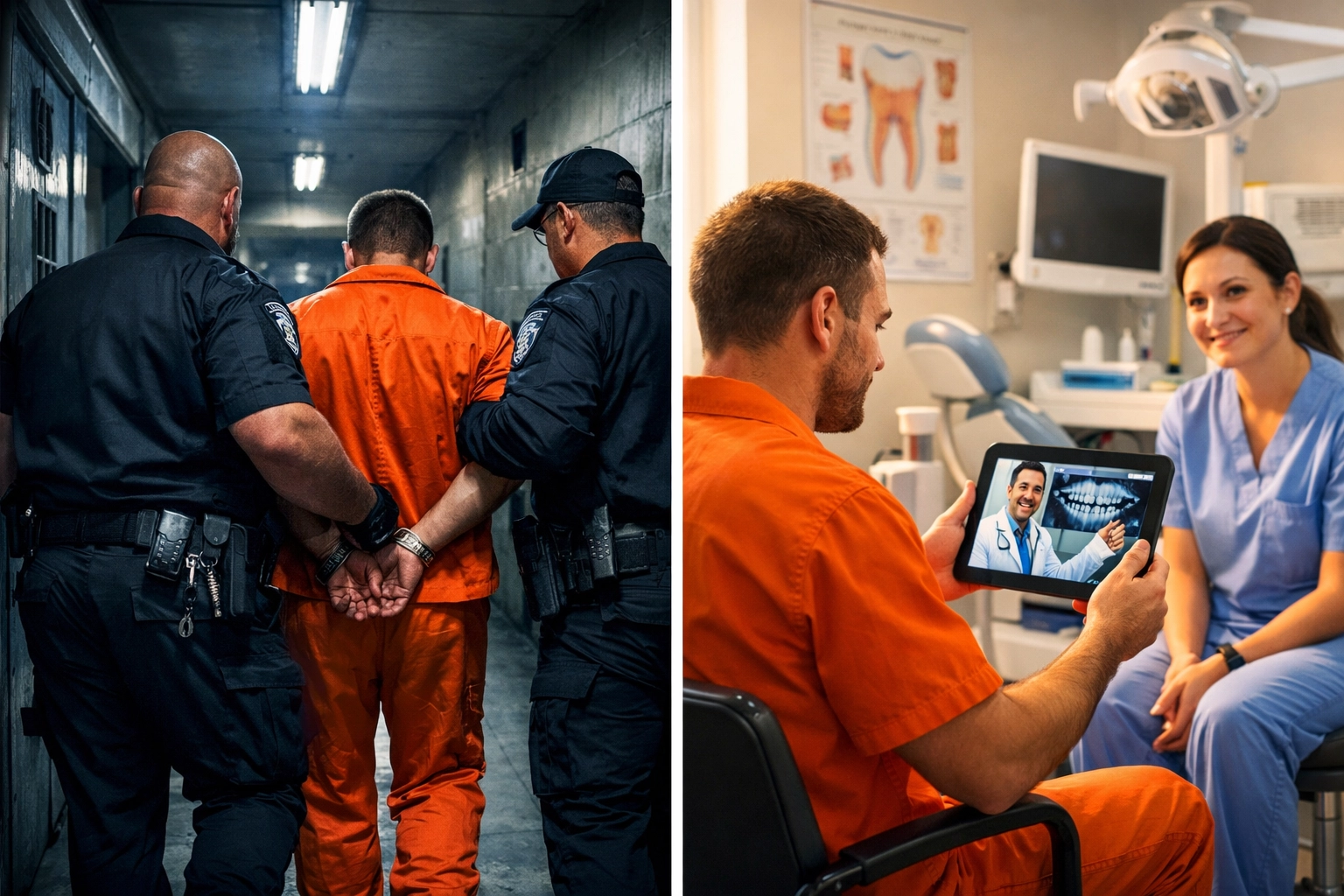
With teledentistry triage, here's what happens instead:
Your medical staff initiates a virtual consultation through a secure platform. Within minutes, a licensed dentist joins the call and can see the inmate via video. The dentist conducts a thorough visual examination, asks relevant questions, and reviews any available medical history.
Based on this assessment, the dentist can:
The entire process takes 15-20 minutes. No transport coordination. No security risks. No waiting days for an appointment. Just immediate professional assessment and treatment recommendations.
Let's talk numbers, because we know facility administrators need to justify every operational decision with solid ROI.
A virtual dental consultation costs a fraction of what you're currently spending on off-site visits. At $64 per consultation, you're looking at immediate savings compared to the hundreds or thousands spent on transport logistics, guard overtime, and external dental fees for what often turns out to be a minor issue requiring only medication or basic care instructions.
But the savings go deeper than individual visit costs. By triaging effectively, you ensure that only inmates who truly need in-person dental treatment leave the facility. This means:
One facility administrator recently shared that implementing teledentistry reduced their off-site dental transports by 87% in the first six months. The cost savings alone paid for the teledentistry program within the first quarter.
Here's something that doesn't always make it into the budget discussions but matters tremendously: staff satisfaction and operational flow. When your correctional officers aren't constantly pulled for transport duty, morale improves. When your medical staff can access dental expertise instantly rather than playing phone tag with external dentists, they're more effective.
Virtual dental triage also creates clear documentation and treatment plans. Every consultation is recorded and logged, providing a clear paper trail for compliance purposes. Your medical staff receives specific instructions from licensed dentists, reducing liability and improving care consistency.
And let's not forget the impact on inmates themselves. Faster access to dental care means less pain, fewer complaints, and reduced tension within the facility. When people know their health concerns will be addressed quickly and professionally, it changes the entire dynamic.
Implementing teledentistry in your facility is simpler than you might think. The technology requirements are minimal: any web-enabled device with a camera will work. Many facilities start with tablets or computers stationed in their medical units.
The real beauty of virtual dental consultations is how seamlessly they integrate into existing protocols. Your staff doesn't need extensive training; the process is intuitive and guided. And because dentists are available 24/7, there's no scheduling coordination required.
Most facilities see immediate impact. Within the first month, staff typically report smoother operations, reduced transport requests, and better outcomes for inmates with dental complaints. The security benefits become obvious quickly: fewer movement logs, fewer officer reassignments, and fewer vulnerabilities.
Dental care in correctional facilities has always been a challenge: balancing security, cost, compliance, and care quality. Traditional approaches force you to make difficult tradeoffs. Virtual dental triage eliminates those tradeoffs.
You get better security by keeping inmates on-site. You get significant cost savings by reducing unnecessary transports. You get 24/7 access to licensed dentists who can provide immediate triage and treatment recommendations. And you get peace of mind knowing you're meeting the standard of care for correctional healthcare.
This isn't experimental technology or an unproven concept. Teledentistry has been successfully implemented in correctional facilities across the country, with measurable results in security improvements, cost reduction, and care quality.
If you're tired of the security risks, budget drain, and operational headaches of traditional correctional dental care, it's time to explore what teledentistry can do for your facility.
Contact Leah Sigler, President at leahs@theteledentists.com to schedule a demo and see how virtual dental triage can work in your specific facility. Let's talk about your current challenges, your budget constraints, and how we can create a customized solution that makes your operations safer, more efficient, and more cost-effective.
Because at the end of the day, the best security protocol is the one that keeps everyone where they belong: and still delivers the care they need.


