
September 24, 2026
Friday night football, soccer tournaments, cross-country meets, and concession-stand snacks are all part of fall sports season. Unfortunately, so are chipped teeth, mouth injuries, toothaches, and questions that cannot wait until Monday morning.
When a dental problem happens on the field, many families assume the emergency room is the only option. But for many non-life-threatening dental concerns, an online dentist can be a faster, more affordable first step, especially when your regular dentist is closed.
The TeleDentists provides 24/7/365 virtual dental consultations for a flat $64 without insurance. Patients can connect with a licensed dentist in about 10 minutes using a smartphone, tablet, computer, phone, or web platform. Certain insurance plans, employee benefit programs, and employers may also provide coverage or discounts.
So, is a $64 virtual dental consult really better than a $500 ER visit? On a busy fall sports night, it often can be.
Imagine this: Your child takes an elbow during a soccer game and chips a front tooth. Or a football player comes off the field holding their mouth after a hard tackle. Maybe the tooth is not knocked out, but it is sharp, sensitive, loose, or painful.
The coach wants to know whether the athlete can return to the game. Your child wants to know whether the tooth can wait. You want professional guidance, but it is 9:30 p.m., and the local dental offices are closed.
That is where a dentist online appointment can help. A virtual dentist can review symptoms, look at photos or video, discuss the injury, and help determine the appropriate next step. Depending on the clinical situation, the dentist may recommend home care, prescribe medication when clinically appropriate, or refer you to a local dentist for in-person treatment.
The American Dental Association reports that non-hospitalized dental-related emergency department visits average approximately $749. These visits can range from roughly $400 to $1,500, depending on location, services, insurance, and the complexity of the problem.
An emergency department is equipped to evaluate serious medical conditions. However, many dental-related visits involve pain, swelling, cavities, abscesses, or dental trauma that require dental follow-up. The ER may provide temporary relief or medication, but it may not have a dentist available to repair a chipped tooth, restore a broken filling, or provide definitive dental treatment.
For more information, see the ADA’s emergency department referral guidance.
| Consideration | The TeleDentists virtual consultation | Emergency room visit |
|---|---|---|
| Typical upfront cost | $64 without insurance | Often $500 or more; ADA reports approximately $400–$1,500 for many dental-related visits |
| Access | 24/7/365 | Available 24/7, but wait times vary |
| Connection time | About 10 minutes | May involve registration and a waiting room |
| Dental-specific evaluation | Yes, with a licensed dentist | Medical evaluation; dental availability varies |
| Prescriptions | When clinically appropriate | Based on medical evaluation and facility policy |
| Local dental referral | Available when in-person care is needed | Follow-up may be left to the patient |
| Best suited for | Many urgent, non-life-threatening dental concerns | Serious medical symptoms, major trauma, or systemic infection |
The comparison is not about avoiding emergency care. It is about choosing the right access point for the problem.
A dental consult online may be appropriate for:
A dentist online consultation does not replace hands-on treatment when a tooth needs repair, extraction, root canal therapy, or another procedure. Instead, it serves as a clinical bridge: helping you understand the situation, manage symptoms appropriately, and find local in-person care when necessary.
The TeleDentists can also provide referrals to local dentists when treatment cannot be completed through online dental care.
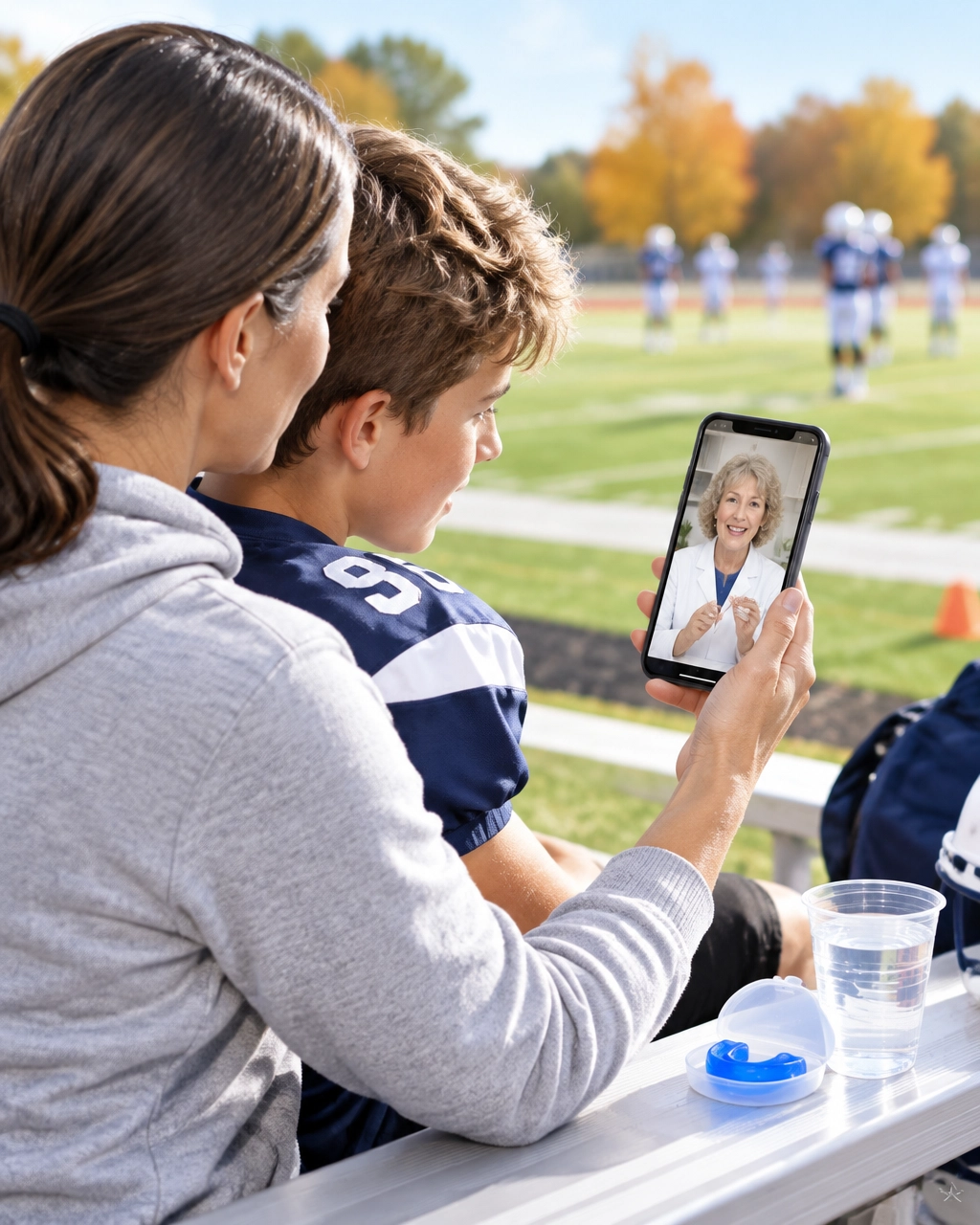
A properly fitted mouthguard is one of the simplest ways to reduce sports-related dental injuries. It can help protect teeth, lips, cheeks, and gums during football, soccer, basketball, hockey, wrestling, and other athletic activities.
For children and teenagers, mouthguards should be worn during both practices and games. A mouthguard that is torn, uncomfortable, too loose, or outgrown should be replaced. Custom mouthguards made by a dentist generally offer the best fit, but a properly molded boil-and-bite guard may also provide useful protection.
If a mouthguard prevents a tooth from breaking or being knocked out, it may save a family from significant pain, missed school, an urgent dental visit, and unexpected costs.
For a chipped or cracked tooth:
For a knocked-out permanent tooth, time matters:
Do not reinsert a knocked-out baby tooth. A child with a knocked-out primary tooth should be evaluated by a dentist, but placing it back in the socket can harm the developing permanent tooth.
The ADA’s dental emergency guidance provides additional first-aid recommendations.
A virtual dentist can help assess many dental concerns, but some symptoms require emergency medical care. Go to the ER or call emergency services for:
If a sports injury involves the head, neck, airway, or severe facial trauma, address those medical risks first. A dental consultation can follow when the athlete is medically stable.
Fall sports often come with candy, nachos, cookies, slush drinks, and sports drinks. These treats are not automatically off-limits, but frequent exposure to sugar and acid can increase the risk of tooth decay and enamel erosion.
Sports drinks can be especially problematic when athletes sip them continuously throughout a game or practice. Sugar feeds cavity-causing bacteria, while acidity can soften enamel.
Parent-friendly ways to protect young athletes’ teeth include:

Save your dentist’s number, keep a mouthguard in the sports bag, and consider carrying a small dental first-aid kit with gauze, a cold pack, and a container for safely transporting a tooth fragment.
If a non-life-threatening dental problem happens after hours, you can see a dentist online now. The TeleDentists is available 24/7/365, and many patients can connect with a licensed dentist in about 10 minutes.
The service costs $64 without insurance, while eligible patients may receive coverage or discounts through certain plans and employers. The TeleDentists is Google’s top-rated teledentistry service and has a current Net Promoter Score of 95, reflecting strong patient satisfaction.
Whether your child needs pediatric dental guidance, your athlete has a chipped tooth, or a toothache starts after the concession stand closes, consult a dentist online before assuming the ER is your only option.
Start your virtual dental consultation with The TeleDentists.
This article is for educational purposes and does not replace professional medical or dental advice. In a life-threatening emergency, call 911 or go to the nearest emergency department.


