
November 3, 2026
The clocks fell back on Sunday, November 1. The extra hour may sound like a gift, but the first week after a time change can throw off sleep and everyday routines. Evenings get darker sooner, kids’ bedtimes can slide, and the hour when a toothache starts may feel suddenly earlier. Right when a dental office may be closing.
That’s a frustrating time to decide where to turn for help. For many dental problems, a $64 virtual dental consultation can be a faster, lower-cost first step than an emergency room (ER) visit. But it isn’t the right choice for every symptom. Here’s how to reset your routine, what to know about common mouth concerns, and when emergency medical care is essential.
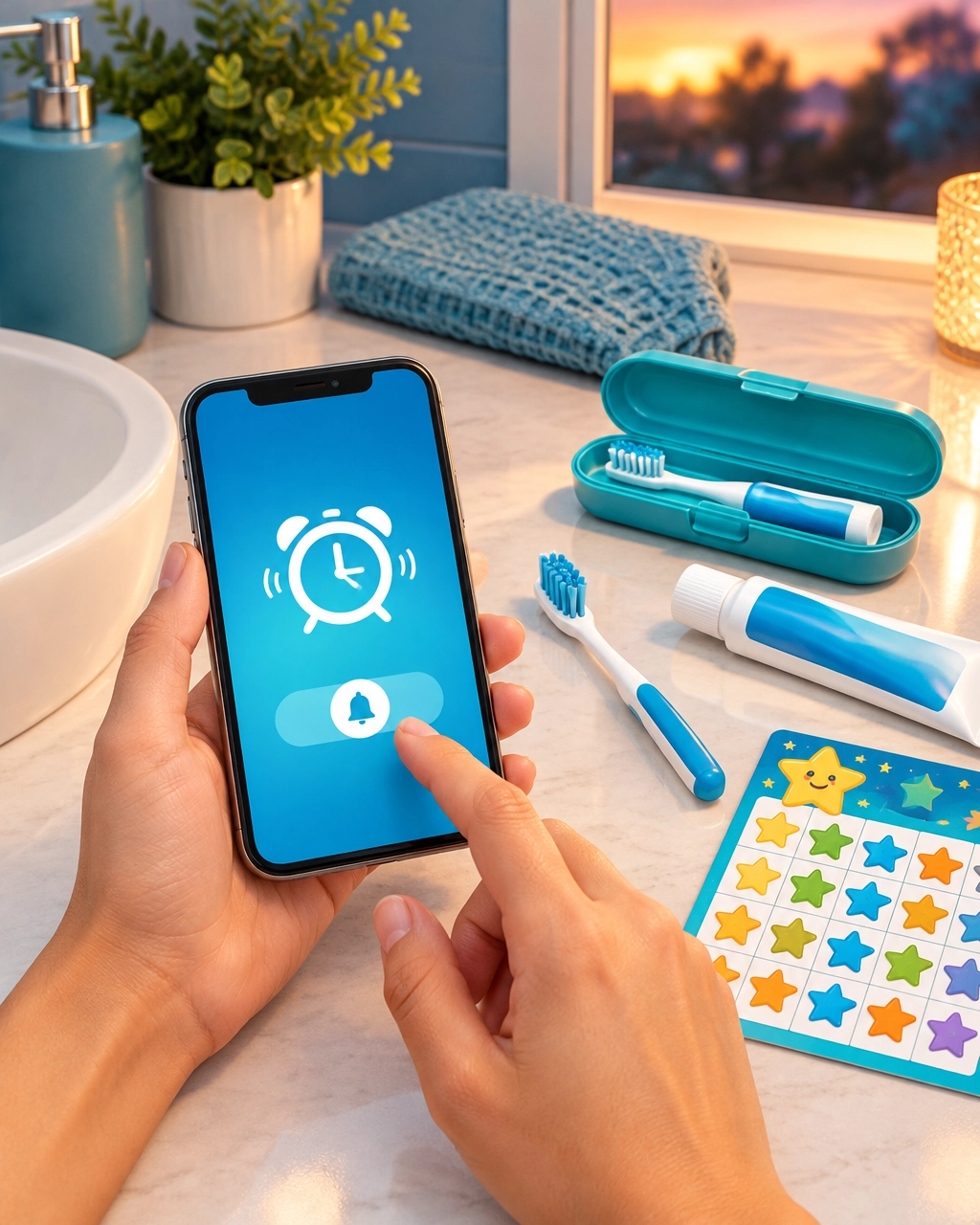
Your body’s sleep-wake rhythm doesn’t necessarily adjust just because the clock does. The American Academy of Sleep Medicine notes that daylight saving time transitions can disrupt sleep and circadian rhythms. Individual experiences vary, but a shifted schedule, darker evenings, and disrupted sleep can make it harder to keep up with habits that depend on a regular bedtime, including brushing.
Adults may also notice more jaw tension during a tiring, stressful week. Research has found an association between self-reported stress and sleep-related teeth grinding, but that doesn’t mean the time change causes bruxism or that everyone will grind their teeth. If you wake with jaw soreness, a tired-feeling jaw, or headaches, make a note of when it happens and mention it to a dentist. A virtual dentist can discuss your symptoms and advise whether an in-person evaluation is appropriate.
Canker sores are another concern some people report during stressful or tiring periods. Stress and fatigue may be triggers for some, though mouth ulcers can have different causes. Most ordinary canker sores heal on their own within one to two weeks. The NHS overview of mouth ulcers and the ADA’s canker sore guidance offer general information on symptoms and self-care.
One rushed or missed brushing session doesn’t automatically cause a cavity. But if a disrupted routine means brushing less often over time, your teeth and gums lose the benefit of consistent cleaning. The American Dental Association recommends brushing twice a day for two minutes with fluoride toothpaste. Its home-care guidance explains why regular brushing matters for preventing tooth decay and gum disease.
Try these simple ways to get back on track:
If you miss a brush, restart with the next scheduled brushing rather than giving up on the routine for the evening, or the week.
A dentist speaking with you online can ask when a sore appeared, whether it’s changing, and whether you’ve had similar sores before. You may also be able to show the area on camera or share a photo. Based on that discussion, the dentist can offer guidance on comfort measures and whether you should arrange an in-person dental visit.
A virtual consultation can’t examine a sore by touch, take X-rays, or perform a procedure. Arrange an in-person evaluation if a sore is not healing, lasts longer than about two weeks, keeps returning, or comes with other concerning changes. If you have difficulty swallowing or breathing, seek emergency care rather than waiting for a virtual dental appointment.
The ER is the right place for symptoms that may signal a serious or rapidly worsening emergency. Seek emergency medical care for trouble breathing or swallowing, rapidly spreading facial or neck swelling, swelling near the eye, uncontrolled bleeding, major facial trauma, or a high fever with severe illness. When in doubt about an immediate threat to your health, call 911 or go to the nearest emergency department.
For a toothache, sensitivity, chipped tooth, lost filling, or gum bleeding without emergency warning signs, a virtual dentist can be a practical first stop. The dentist can assess your symptoms and help you understand what to do next, including whether you need in-person care.
The ADA has cited an average cost of about $749 for a dental-related ER visit when the patient is not hospitalized, with a typical range of roughly $400 to $1,500. These are reported averages, not a quote for your visit: actual charges and out-of-pocket costs vary by location, services, insurance, and the care provided. A self-pay consultation with The TeleDentists is $64. It’s a different kind of visit, and it does not replace emergency medical care or hands-on dental treatment when those are needed.
| $64 virtual dental consultation | ER visit for a dental problem | |
|---|---|---|
| Best suited for | Tooth pain, sensitivity, a chipped tooth, lost filling, gum bleeding, or questions about a mouth sore, when emergency warning signs are absent | Serious symptoms such as trouble breathing or swallowing, rapidly spreading swelling, uncontrolled bleeding, major facial trauma, or high fever with severe illness |
| Access | Available 24/7 by video, app, phone, or web; a dentist typically joins within 10 minutes | In-person emergency care; wait times and access vary |
| What it can provide | A discussion of your symptoms, visual assessment by camera or photos, guidance, prescriptions for non-narcotic medication when appropriate, and referral to a local dentist if needed | Emergency medical evaluation and treatment based on your condition and the services available at the hospital |
| What it cannot do | Take X-rays, perform procedures, or replace an in-person examination when hands-on care is needed | Guarantee definitive dental treatment; some dental problems still require follow-up with a dentist |
| Cost context | $64 self-pay consultation | ADA-cited average of about $749 for a non-hospitalized dental-related ER visit; reported range roughly $400–$1,500, not a guaranteed price |
During a virtual visit, a dentist can ask about your symptoms and medical history, look at the area by camera or review photos, and discuss next steps. Depending on the situation, a dentist may prescribe a non-narcotic medication when appropriate or refer you to a local dentist for an examination or treatment.
Virtual care has clear limits: a video call cannot provide dental X-rays or procedures such as repairing a tooth or treating an infection in person. Sometimes the best outcome of a consultation is a clear referral for hands-on care.
Learn more about The TeleDentists’ services and find answers to common questions in the Frequently Asked Questions.
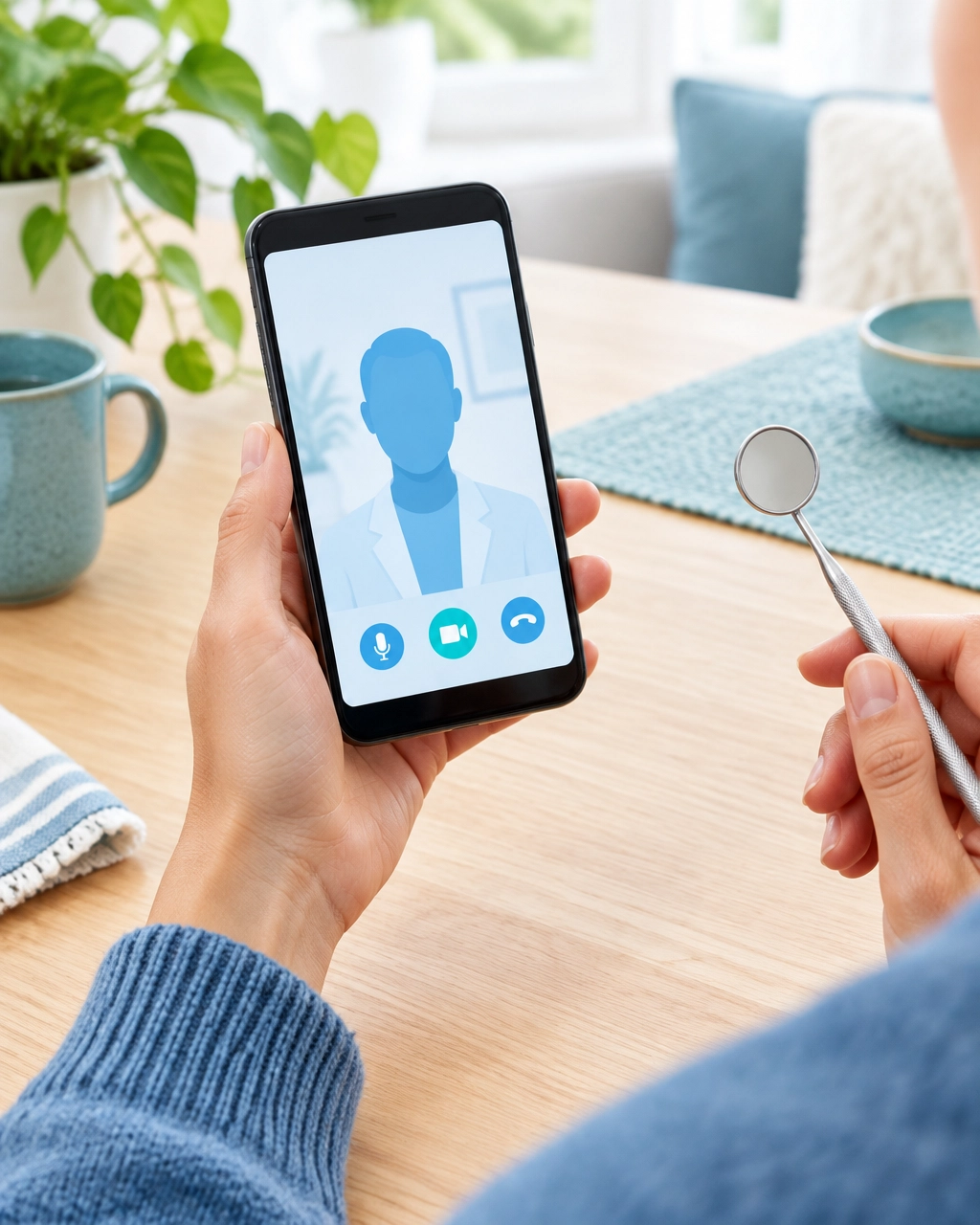
The TeleDentists provides 24/7 access to virtual dental consultations, with a dentist typically joining within 10 minutes. The company describes itself as Google’s top-rated teledentistry service and reports a Net Promoter Score (NPS) of 95.
For a non-life-threatening toothache or another dental concern, a virtual visit can help you get professional guidance without starting with an ER visit that may cost substantially more. And if your symptoms point to an emergency or need in-person treatment, the dentist can help direct you to the appropriate next step.
For more guidance, connect with The TeleDentists. Book a $64 virtual dental consultation.


