
October 6, 2026
Halloween is supposed to be about costumes, neighborhood walks, and a little extra candy, not a late-night toothache or an unexpected dental bill. But hard candy can chip teeth, sticky treats can pull out crowns, and sour candy can irritate already-sensitive teeth. When that happens, the timing can be especially frustrating: your regular dentist may be closed, your child may be in pain, and you may still be deciding which dental benefits to choose during open enrollment.
The good news is that you have options.
Telehealth dentistry can provide fast guidance for many urgent dental concerns, while open enrollment is a useful opportunity to understand your coverage, compare costs, and plan for care before the next dental surprise. With The TeleDentists, you can connect with a licensed dentist online 24/7 from a smartphone, tablet, or computer.
One moment, you are enjoying a piece of candy. The next, you feel a sharp edge, a crack, or sudden pain.
Hard candies, jawbreakers, and treats with hidden nuts or hard pieces can chip or fracture a tooth. Sticky candies such as caramel, taffy, and gummies may pull out a filling or crown. Sour candies contain acids that can irritate enamel and worsen sensitivity.
If you experience a toothache or chipped tooth after eating candy:
A dental consult online can help determine how urgent the problem may be, what you can do safely while waiting for in-person treatment, and whether you need a local dental referral.

Dental insurance can be confusing, especially when the plan documents use different terms for exams, emergency visits, virtual care, and specialist referrals. Before choosing or renewing a plan, check whether telehealth dentistry is included.
The TeleDentists’ standard self-pay price is $64 for a virtual consultation. For patients whose benefits include teledentistry, the copay may be approximately $50–$59, depending on the plan and eligibility. That means coverage could reduce the cost by about $5–$14 compared with the flat self-pay price, but your plan determines the final amount.
When reviewing your benefits, ask:
You can also review The TeleDentists’ frequently asked questions for information about coverage, pricing, prescriptions, and referrals.
Halloween candy is not the only cause of dental pain. A cavity, cracked tooth, gum infection, or old restoration may become noticeable when you are already busy with school events, travel, parties, and holiday plans.
A swollen gum or localized swelling around a tooth can be a sign of infection. A lost filling or crown may expose sensitive areas of the tooth and make eating uncomfortable. Even if the pain improves, the underlying problem may still need treatment.
During a virtual appointment, a licensed dentist may be able to:
Virtual care does not replace fillings, crowns, extractions, or other in-person procedures. It serves as a convenient clinical bridge, especially when your regular dentist is unavailable or you are unsure where to begin.
Many people delay dental care because they are worried about cost. Unfortunately, waiting can allow a small problem to become a larger and more expensive one.
For example, a minor sensitivity issue may eventually become severe tooth pain. A chipped tooth may develop a larger fracture. A lost crown may leave the tooth vulnerable to further damage. Getting professional guidance early can help you understand your options and avoid making decisions based only on fear or guesswork.
A cheap online dentist search may lead you to services with unclear pricing or limited availability. Look for transparent information, licensed providers, and a clear plan for follow-up care. The TeleDentists offers a $64 self-pay virtual consultation, with possible insurance copays in the $50–$59 range for eligible patients.
If you have a dental benefit through your employer, do not assume it automatically covers virtual care. Verify the details before you need them.
Kids can be especially vulnerable to Halloween-related dental problems. They may bite hard candy, chew sticky treats, or continue eating even after a tooth begins to hurt. Younger children may simply become irritable, stop eating, or wake during the night.
Watch for signs such as:
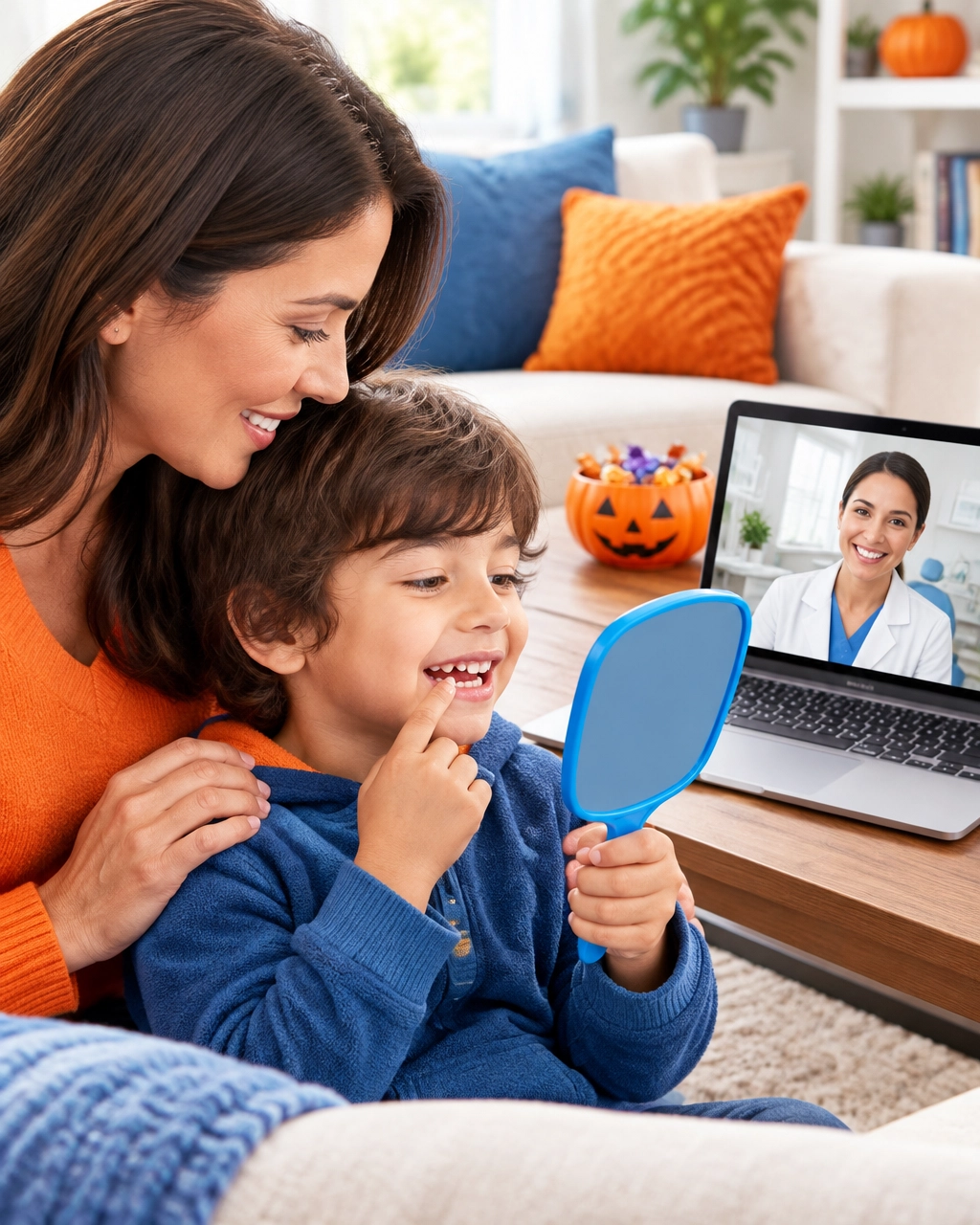
Parents can use an online dentist appointment to get timely guidance without taking a child into a waiting room late at night. A dentist can help you decide whether the child needs immediate in-person care, what to avoid, and how to locate a pediatric or general dentist nearby.
For prevention, the American Dental Association’s Halloween Survival Guide recommends enjoying treats with meals, limiting frequent snacking, and avoiding sticky, sour, and hard candies when possible. Chocolate that does not stick to teeth as readily is generally a better choice than chewy candy.
Open enrollment is also the time to review your health savings account or flexible spending arrangement. Dental expenses may qualify, but the rules depend on your account and plan.
The IRS explains that HSAs and FSAs can generally be used for qualified medical expenses, including many types of dental care. The IRS also notes that remote care and telehealth may be treated differently depending on the plan and applicable requirements. Review the current rules at IRS Publication 969, and confirm eligibility with your benefits administrator before paying.
Keep these questions in mind:
Using available benefit dollars may make it easier to seek advice early instead of postponing care until pain becomes severe.
Emergency departments are essential for life-threatening problems, but they are not usually the best setting for non-life-threatening tooth pain, a lost filling, or a chipped tooth. An ER may provide medical evaluation, pain relief, or antibiotics when appropriate, but it typically cannot complete definitive dental treatment such as a filling, crown, root canal, or extraction.
For localized tooth pain, a chipped tooth, swollen gum, or lost crown without severe medical symptoms, start with a dentist or dentist online appointment when your regular provider is unavailable. The TeleDentists can help you understand the next step and connect you with local care when necessary.
Seek emergency medical care immediately, or call 911-if you have:
When in doubt, choose the safest option and contact emergency medical services. A virtual dental consultation is not a substitute for emergency medical treatment when your airway, breathing, bleeding, or overall health may be at risk.
A few minutes of preparation can make a stressful night easier. Save your dental insurance member information, check whether your plan includes teledentistry, review your HSA or FSA rules, and identify a local dentist for follow-up care.
If tooth pain, a chipped tooth, swollen gum, or lost crown catches you after hours, you do not have to guess what to do next. The TeleDentists provides online dental care from home, with licensed dentists available 24/7 and consultations often beginning within about 10 minutes.
Ready to get guidance? Start a $64 virtual consultation with The TeleDentists.


